Access by Badge: How Press Credential Rules Shape Who Reports From the Capitol to the Precinct
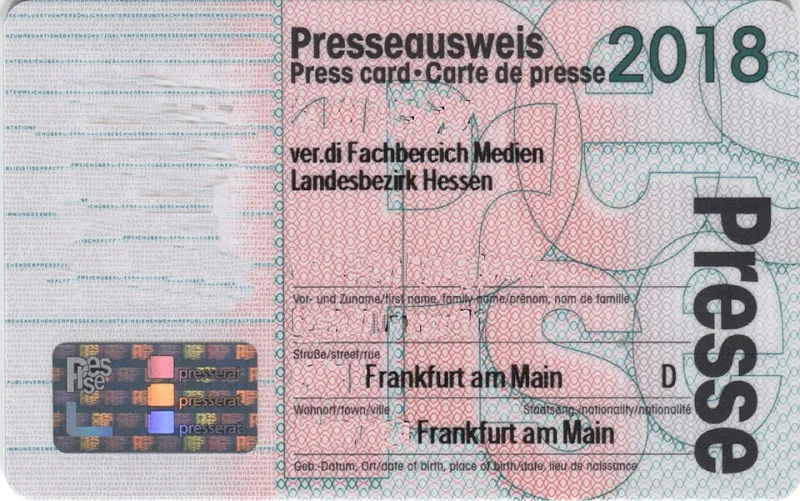
Photo: Uploader, CC BY-SA 3.0 de, via Wikimedia Commons
The press credential looks like a small administrative artifact: a laminated card, a lanyard, a line on a security log. In practice, it is one of the most consequential pieces of paperwork in American journalism. A credential determines whether a reporter can stand in a city council chamber, cross a police line, question a governor, or sit in a courthouse hallway. It also determines who cannot.
In 2026, the system that issues these badges is not one system at all. It is a patchwork of hundreds of authorities—police departments, city clerks, state legislatures, federal agencies, congressional press galleries, courts, school districts, and event organizers—each with its own rules, fees, and expectations. The result is a gatekeeping architecture that few Americans see and that many journalists navigate with a mixture of routine and anxiety.
The Badge as Bottleneck
Officials usually justify credentialing with security and crowd control. A government building has limited space; a crime scene has a perimeter; a legislative floor has rules. News organizations generally accept those premises. The dispute begins when security requirements blend into editorial judgments about who counts as a journalist.
Some credentialing systems require a letter from a news director. Others demand proof of full-time employment, a published portfolio, a police background check, a fee, or sponsorship by an established outlet. Each requirement sounds reasonable on its own. Together, they can exclude independent reporters, freelancers, student journalists, and small ethnic media that serve communities larger outlets do not cover.
What Issuers Ask For
The standards vary widely. A city hall may issue a daily pass to anyone with an assignment letter and a photo ID. A state police agency may require fingerprints, a processing fee, and weeks of waiting. A court may have no formal credential at all, relying instead on courtroom rules. A federal agency may recognize one press pass but not another. The congressional press galleries have their own sponsorship and eligibility rules.
For journalists, the practical burden is not only the paperwork. It is the uncertainty. A reporter may be credentialed for one agency but turned away at another. A photographer may be allowed into a briefing but not onto the sidewalk outside. A freelancer may secure a pass for a single assignment, only to find that the pass expires before the follow-up story.
The Freelance Gap
The credential system assumes a newsroom that many Americans no longer have. Full-time staff reporters usually receive credentials through their employers. Freelancers must assemble their own proof of professional purpose, often at their own expense. If a story is killed, the assignment letter may become worthless. If an outlet pays late, the freelancer still pays the fee.
This is not a minor inconvenience. It shapes coverage. A reporter who cannot get regular access to a police briefing will struggle to build sources there. A photographer who cannot enter a council chamber will miss the vote. A small outlet without a legal department may decide that the credential fight is not worth the cost. The public then receives less information about the institutions that affect daily life.
Public Access or Private Club?
Credentialing can protect public access by keeping order at scenes and ensuring that working journalists can do their jobs. But it can also become a private club. When the definition of journalist is narrow, access narrows with it. When fees and background checks are opaque, the press corps becomes more homogeneous. When appeals are unavailable, a denial can end a reporter's ability to cover a beat.
The First Amendment does not guarantee a reporter a special seat in every room. It does protect the public's interest in a free press. That interest is weakened when access depends on institutional backing rather than on the work itself.
A More Transparent Standard
There are practical reforms that do not require abandoning security. Agencies could publish their credential criteria, fee schedules, and appeal processes. They could issue provisional passes for specific assignments. They could recognize freelance commissions and small outlets with clear verification. They could set time limits and explain denials in writing.
The credential gate is not going away. It can be made more legible. The question is whether America's press pass system will continue to reward those who already have institutional backing, or whether it will preserve a place for the reporters who cover the meetings, the protests, and the police briefings that others miss.