Inside the Propaganda Machine: Tracing the Hidden Networks That Manufacture False Narratives in America
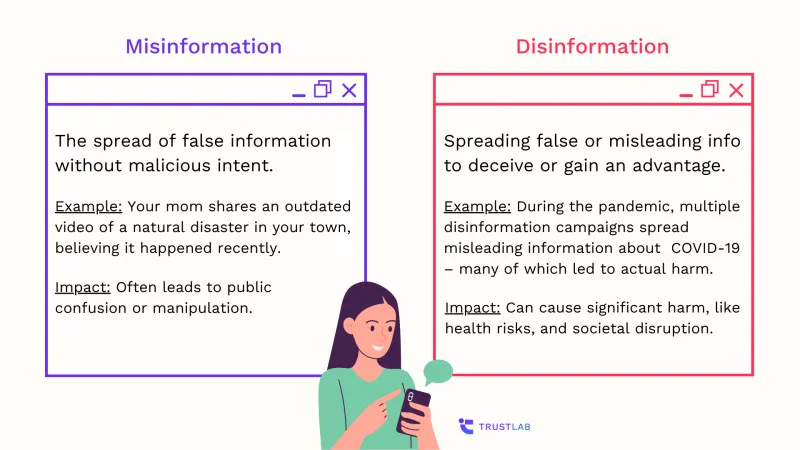
Photo: misinformation network digital propaganda social media manipulation, via examplesweb.net
By the time most Americans encounter a false narrative online, the hard work of deception has already been done. The story has been crafted, tested, seeded into fringe communities, amplified by coordinated accounts, and ultimately laundered through mainstream channels until it resembles credible reporting. What looks like spontaneous public outrage or a breaking news development is often the final stage of a carefully engineered process — one that begins far from public view.
Understanding how disinformation is manufactured and distributed is essential not only for journalists and policymakers, but for every citizen who consumes news in the digital age.
The Factory Floor: Where False Narratives Are Born
Coordinated disinformation rarely originates with a single bad actor posting on a personal account. More often, it begins in what researchers call "content farms" — organizations, sometimes state-affiliated and sometimes commercially motivated, that produce misleading or entirely fabricated material at scale.
During the 2016 and 2020 U.S. election cycles, federal investigators and academic researchers documented the operations of foreign-linked entities that employed dozens of writers, translators, and social media managers to produce English-language content specifically targeting American audiences. These operations were not improvised. They were structured like media companies, complete with editorial calendars, performance metrics, and audience segmentation strategies.
Domestic disinformation networks operate along similar lines, though their motivations are often financial as much as ideological. Studies conducted by the Tow Center for Digital Journalism have identified networks of hyperpartisan websites — many with names designed to mimic legitimate local news outlets — that publish misleading content to generate advertising revenue. The false information is a product. The outrage it generates is the business model.
Funding the Lie: Who Pays for Disinformation
Following the money behind disinformation campaigns reveals a diverse and often surprising set of financiers. Some operations are directly funded by foreign governments seeking to sow division within democratic societies. Others are bankrolled by domestic political organizations, industry lobbying groups, or ideologically driven foundations that operate at arms' length from the content they effectively sponsor.
In less visible corners of the ecosystem, disinformation is simply profitable. Programmatic advertising systems, which automate the placement of ads across millions of websites, have historically made little distinction between credible journalism and fabricated content. A website publishing inflammatory falsehoods about a political figure can generate thousands of dollars per month in ad revenue if it attracts sufficient traffic — and inflammatory content, by design, attracts traffic.
Efforts to defund disinformation through advertiser pressure have produced mixed results. While major brands have periodically pulled advertising from platforms found to host harmful content, enforcement is inconsistent, and smaller publishers operating below the radar of brand safety audits continue to profit from misinformation.
The Distribution Network: From the Fringe to the Mainstream
Perhaps the most consequential dimension of modern disinformation is the speed and efficiency with which false narratives travel from obscure origins to mass audiences. Researchers at MIT's Media Lab published findings showing that false news stories spread significantly faster and reached broader audiences on major social platforms than accurate reporting — a structural advantage built into the architecture of engagement-driven algorithms.
The distribution pathway typically follows a recognizable pattern. A fabricated or heavily distorted story is first published on a low-credibility website or shared within a closed online community. Coordinated accounts — some automated, some operated by real users — amplify the content, generating the appearance of organic popularity. As engagement metrics rise, algorithmic recommendation systems surface the content to wider audiences. Eventually, a partisan media outlet or a high-profile social media personality with a large following picks up the story, providing it with a veneer of legitimacy. At that stage, even mainstream newsrooms may feel compelled to address the claim, inadvertently extending its reach further.
This process — sometimes called "narrative laundering" — exploits the credibility transfer that occurs when a story moves from an obscure source to a recognized one. By the time a correction is issued, the original false claim has often reached an audience many times larger than the correction will ever reach.
The Human Cost of Manufactured Falsehoods
The consequences of disinformation extend well beyond electoral politics. During the COVID-19 pandemic, health officials documented direct links between the spread of false medical claims online and measurable declines in vaccine uptake in specific communities. In several documented cases, individuals made medical decisions based on fabricated or grossly distorted information — with serious and, in some instances, fatal outcomes.
Communities targeted by racially motivated disinformation campaigns have experienced real-world violence linked to false narratives spread online. Businesses, public officials, and private citizens have faced harassment, threats, and reputational damage as a result of fabricated stories that spread faster than any rebuttal could travel.
What Responsible Journalism Can Do
Journalists and news organizations occupy a critical position in the disinformation ecosystem — capable of either amplifying false narratives through uncritical coverage or disrupting their spread through rigorous verification and transparent reporting practices.
Several newsrooms have developed dedicated disinformation reporting desks, employing specialists in open-source intelligence, social media forensics, and network analysis. Organizations such as the Stanford Internet Observatory and First Draft have established methodologies for tracing the origins and distribution pathways of false claims, providing journalists with tools to report on disinformation as a systemic phenomenon rather than a series of isolated incidents.
For American audiences, the most effective defense against disinformation is not skepticism of all information, but rather the development of media literacy skills that allow individuals to evaluate sources, verify claims, and recognize the structural signatures of coordinated influence campaigns. A well-informed public, supported by accountable journalism, remains the most durable obstacle to the machinery of manufactured falsehood.
The disinformation supply chain is sophisticated, well-funded, and continuously evolving. Dismantling it requires an equally sustained and collaborative effort — from journalists, platforms, policymakers, educators, and citizens alike.