Recognizing the Architecture of Deception: How Coordinated Disinformation Campaigns Are Built and How to Dismantle Them
When a false narrative spreads rapidly across American social media platforms, the instinct is to address the claim itself — to locate the inaccuracy, cite the correction, and move on. But experienced media analysts and disinformation researchers increasingly argue that this approach treats the symptom while ignoring the disease. The real story, they contend, is not the lie but the machinery behind it.
Coordinated disinformation campaigns do not behave like ordinary misinformation. They follow patterns. They leave fingerprints. And once a reader learns to recognize those structural signatures, the difference between organic disagreement and manufactured consensus becomes considerably easier to detect.
The Difference Between Misinformation and Coordinated Disinformation
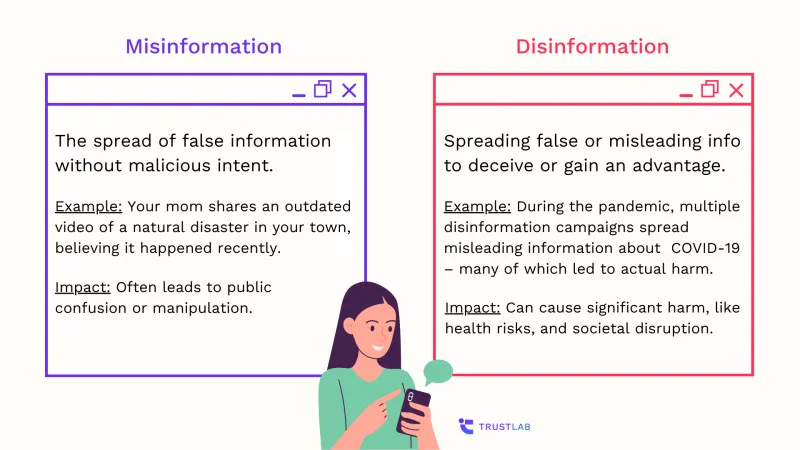
Misinformation is a broad term that encompasses any false or misleading content shared in the information ecosystem, often without deliberate intent. Disinformation, by contrast, is intentional. Coordinated disinformation takes that deliberateness further: it involves multiple actors, synchronized timing, and layered amplification strategies designed to simulate grassroots consensus.
The Stanford Internet Observatory and the Atlantic Council's Digital Forensic Research Lab have documented dozens of such campaigns targeting American audiences in recent years. What distinguishes these operations is not merely their scale but their architecture — the way they are assembled, seeded, and spread.
Tactical Signature One: Inauthentic Amplification at Launch
One of the clearest early indicators of a coordinated campaign is an unnatural spike in engagement immediately following a post or story's publication. Organic content builds audience gradually. Coordinated content is often pre-loaded with engagement — likes, shares, and comments — that arrive in an implausibly compressed timeframe.
During the 2020 U.S. presidential election, researchers at Stanford identified multiple instances in which narratives about mail-in voting fraud were seeded across dozens of low-follower accounts within hours of each other, before being picked up by larger platforms and amplified into mainstream discourse. The timing was not coincidental; it reflected a coordinated seeding strategy designed to create the appearance of widespread concern.
Readers who notice that a story has accumulated thousands of shares but minimal original commentary — or that the engagement pattern looks unusually uniform — should treat this as a signal worth investigating further.
Tactical Signature Two: Cross-Platform Synchronized Messaging
Coordinated campaigns rarely confine themselves to a single platform. A narrative will often appear on fringe forums, migrate to mainstream social networks, and then receive amplification through email newsletters, podcasts, or low-credibility websites — all within a short window.
During the COVID-19 pandemic, public health disinformation followed precisely this pathway. Claims about vaccine efficacy and government overreach were first circulated on alternative platforms before being introduced into broader public conversation through accounts with larger, more established audiences. The cross-platform coordination was not always centrally directed; sometimes it was ideologically aligned actors operating in parallel. But the structural outcome was the same: a false narrative achieved reach and legitimacy it would never have earned through organic spread.
When readers encounter a story that appears simultaneously across ideologically consistent but otherwise unconnected outlets, that simultaneity warrants scrutiny.
Tactical Signature Three: The Strawman Amplification Loop
A subtler but highly effective disinformation tactic involves the deliberate amplification of fringe or extreme positions attributed to mainstream figures or institutions. The goal is not to spread a specific lie but to distort the perceived landscape of public opinion — to make extreme positions appear more common than they are, and moderate positions appear extreme.
This tactic appeared prominently during the debate over critical race theory in American public schools, a controversy that was substantially shaped by coordinated messaging campaigns. Academic terminology was extracted from narrow professional contexts, attributed to broad institutional agendas, and amplified through political networks in ways that bore little resemblance to actual policy debates in most school districts. The result was a widespread public perception of a crisis that, in operational terms, was largely manufactured.
Readers should be alert to narratives that rely heavily on unnamed sources, vague institutional attributions, or claims about what "they" believe without specific, verifiable citation.
Tactical Signature Four: Emotional Velocity Without Evidentiary Depth
Coordinated disinformation campaigns are optimized for emotional engagement, not informational depth. They tend to generate strong visceral reactions — outrage, fear, contempt — while offering very little in the way of verifiable evidence, named sources, or traceable documentation.
In corporate crisis contexts, this tactic has been deployed to shape public perception of companies facing regulatory scrutiny. During several high-profile data privacy controversies, researchers documented campaigns in which emotionally charged but evidentially thin narratives were introduced into public discourse just as regulatory proceedings were approaching critical junctures. The timing was strategic; the content was engineered for maximum emotional velocity.
A useful heuristic: if a story produces a strong emotional response but resists easy verification — if the sources are anonymous, the documentation is absent, and the claims are sweeping — slow down before sharing.
What Readers and Journalists Can Do
The structural approach to disinformation detection does not require specialized software or institutional resources, though tools like CrowdTangle, Botometer, and the NewsGuard browser extension can assist more rigorous investigations. For everyday readers, several practices are accessible and effective.
First, examine the provenance of a story before engaging with its content. Who published it? When was the outlet established? Does it have a track record of corrections and editorial accountability? Second, look for corroboration across editorially independent sources — not ideologically similar ones. Third, treat synchronized emotional surges with the same skepticism one might apply to a coordinated advertising campaign, because that is, in structural terms, precisely what they are.
For journalists, the imperative is equally clear. Reporting on disinformation requires moving beyond the "he said, she said" model of false balance and toward an architecture-focused analysis that reveals not just what was said but how it was built, who built it, and why it was timed the way it was.
The Stakes of Getting This Right
The consequences of failing to recognize coordinated disinformation are not abstract. In the context of elections, public health, and corporate accountability, manufactured narratives have demonstrably shaped policy outcomes, discouraged civic participation, and eroded institutional trust. The American information environment is not merely contested; in significant respects, it is actively contested by actors who understand its vulnerabilities with considerable sophistication.
Recognizing the architecture of deception is not a guarantee against manipulation. But it is an essential first step toward an informed citizenry capable of navigating an information landscape that is far more engineered than it appears.